
Return to Science in the News Main Group Page
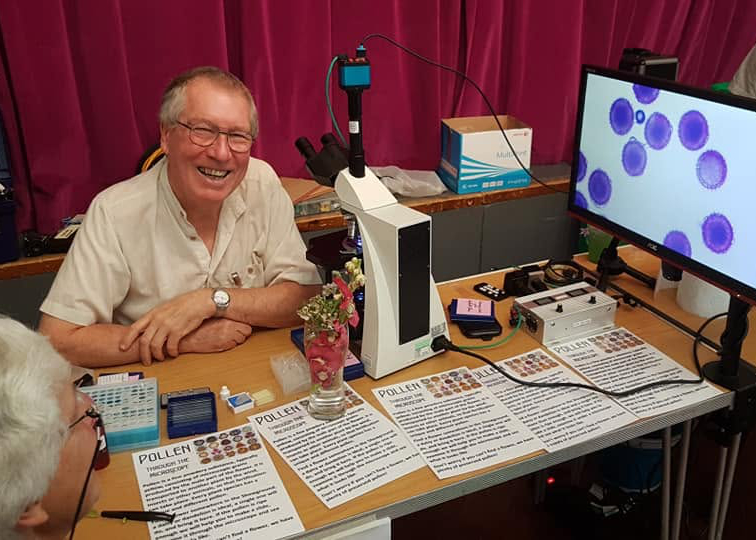
September 3rd Gordon Brown
How the Internet changed Amateur Microscopy
This was an account of how amateurs have gained access to very advanced microscopy equipment and techniques by using the internet and social media. Gordon also outline one or two of the less savoury developments.
Gordon is a retired acoustics consultant but has owned and has been obsessed with microscopes since the age of eight, adding more advanced equipment as the years have gone by. He is currently a member of the Quekett Microscopical Club (the national amateur microscopy organisation), a member and technical advisor to the Iceni Microscopical Group based in Bergh Apton. He also is co-lead of the Anglian Microscopy Group based in Crowfield, Suffolk. This is an outreach project of the Quekett and is one of the largest amateur microscopy groups in the UK with up to 45 members attending each month.
Monday July 13th 2026
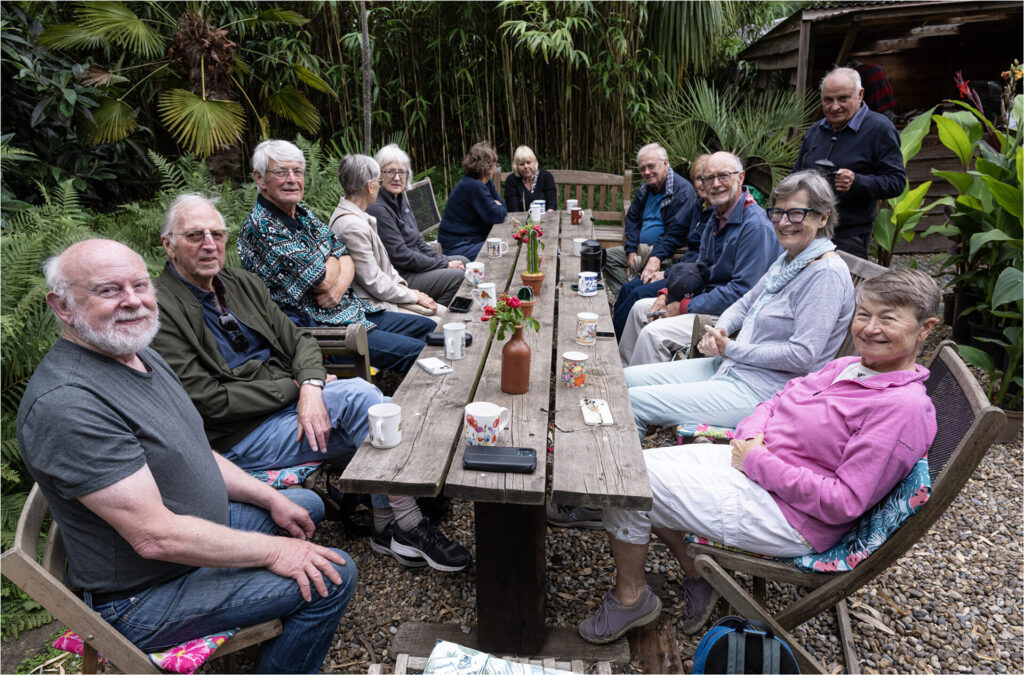
Science group visit to Henstead Exotic Garden
Photo: Mike Lloyd
Science in the News - Past Talks
July 2nd
Organ-on-Chip. Watching Microbes at Work in the Gut and Beyond
Dr Emily Jones. Quadram Institute Norwich
Dr Emily Jones is a research scientist at the Quadram Institute in Norwich, where she studies how microbes interact with our cells using “organ‑on‑chip” technology and advanced microscopy. She has spent more than a decade developing human cell models to understand infections and other diseases of organs including the gut, brain, lungs and female reproductive tract. Emily’s recent work includes building miniature, lab‑grown versions of the gut-brain axis to investigate how toxins and microbes might contribute to conditions such as Parkinson’s disease or SARS-CoV-2. She is also currently developing a new vaginal infection model to tackle common, often recurrent yeast infections in women. She works closely with clinicians and industry to reduce reliance on animal experiments and to improve diagnostics and treatments for human diseases.
June 4th
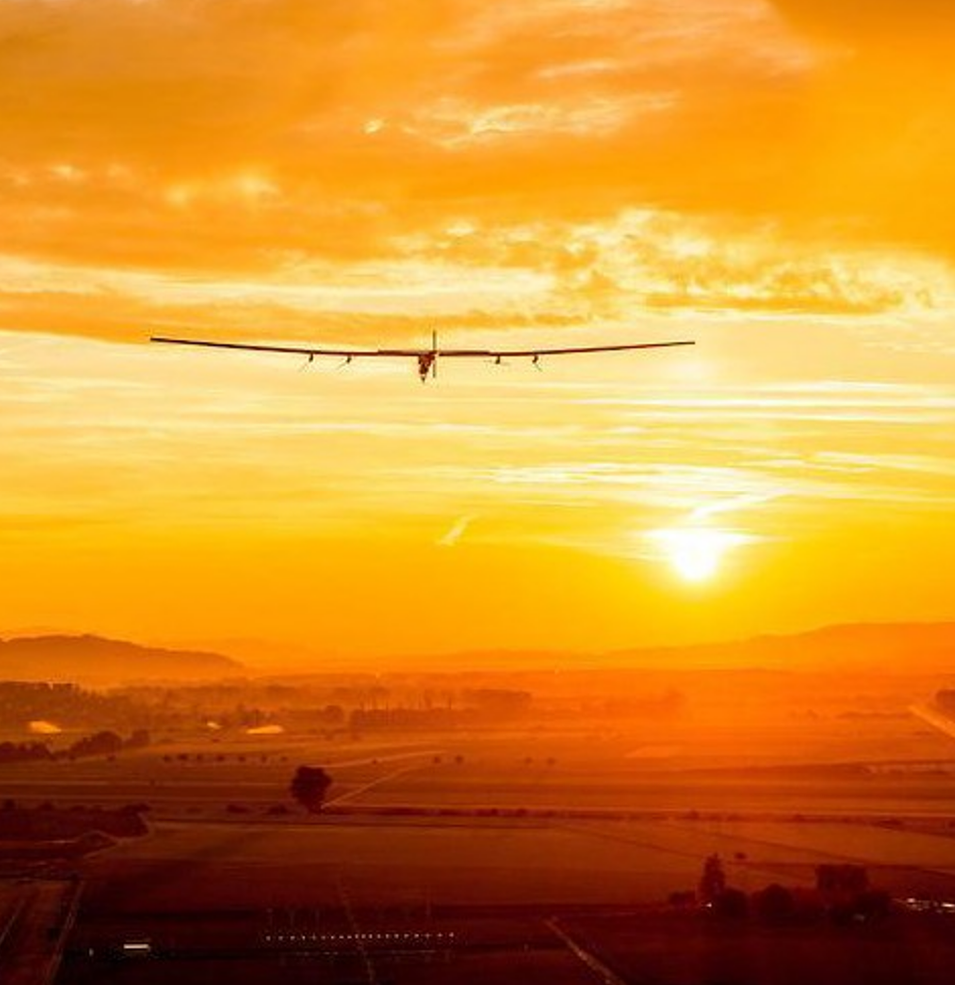
Solar Impulse, the Solar Impulse Foundation and Climate Impulse
Sarah Emes, Solvay Corporate Communications Team, retired
Sarah told the story of Solar Impulse ten years after it completed the first ever solar-powered flight around the world. Since then, the Solar Impulse Foundation is dedicated to promoting clean and profitable solutions for environmental sustainability and Climate Impulse, a two-manned airplane will be powered by green hydrogen to fly non-stop round the world in 2029.
Further interest links: Historic flight - around the world in a solar-powered plane: Solar Impulse
The Solar Impulse Foundation "Solutions Explorer" - the search engine for climate action I was unable to demonstrate during the meeting.
The Solar Impulse Foundation labels and promotes efficient solutions and changing to clean technologies globally.
Climate Impulse, the current environmental flagship project 2024-2029.
May 6th .
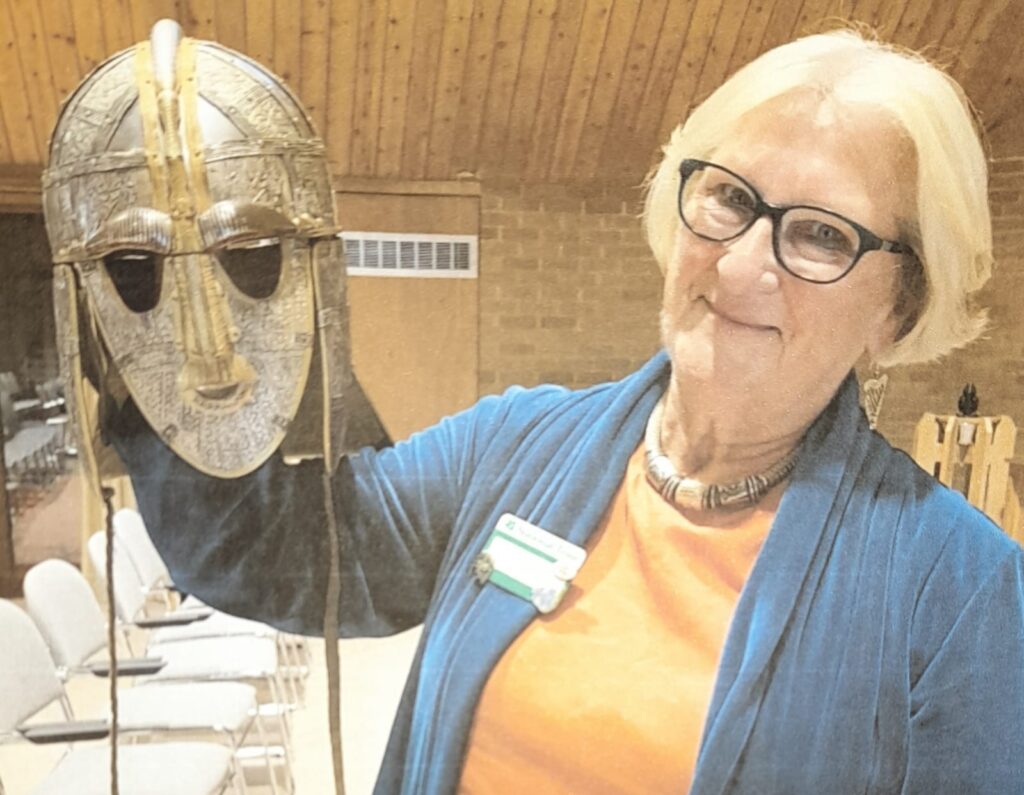
Update on developments at Sutton Hoo.
Sally Sibley National Trust
New excavations have been taking place over 2024 -2025 making use of advanced technology such as XRF (X-ray fluorescence) to analyse finds and a magnetometer cart with high resolution ground-penetrating radar to explore uncharted areas. (Photo credit Salley Sibley).
April 2nd
Sausages and Superbugs - How Modern Farming is Reshaping Global Health
Dr Lucy Weinert. University of Cambridge.
For millennia, humans and pigs have lived in close proximity, but the rise of intensive animal agriculture is driving new biological threats. This talk explores how intensification - the shift toward high-density, large-scale farming - has acted as an evolutionary pressure, transforming benign farm bacteria into human superbugs.
We will trace the rise of two different bacterial species that illustrate this shift. We will look at the emergence of CC104 and CC233, two strains of the pig bacterium, Streptococcus suis. By shape-shifting their outer coats and evolving resistance to penicillin, these strains have bypassed our medical defences to cause severe disease in South East Asian human populations. We will also examine MRSA CC398, a lineage of Staphylococcus aureus that jumped from people to pigs, adapted to the industrial farm environment, and is now spilling back to humans with newfound antibiotic strength.
Dr Lucy Weinert is an evolutionary biologist and Associate Professor in the Department of Veterinary Medicine at the University of Cambridge. She is internationally recognised for her work on the genomics of bacterial pathogens. Dr. Weinert holds a B.Sc. from the University of Bristol and a Ph.D. from the University of Edinburgh. Her career includes receiving two fellowships from the Royal Society and the Wellcome Trust, which enabled her to establish her research group at Cambridge in 2015
Thursday March 5th 2026
From Source to Tap - Drinking Water Treatment and Supply to Beccles and Surrounding Areas
Mike Walker
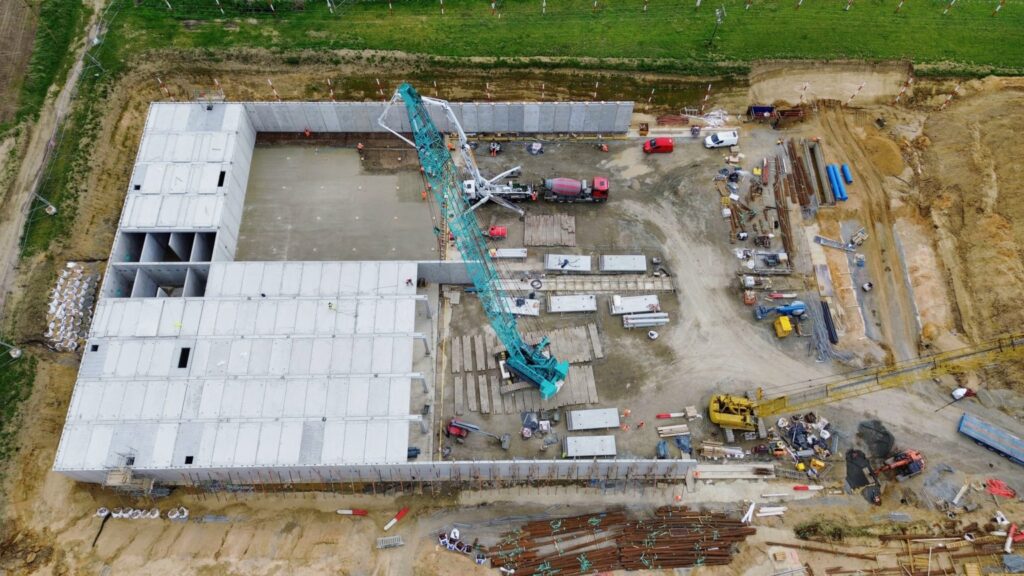
Many of you will have seen the work going on at Barsham. Essex and Suffolk Water, part of Northumbrian Water Group, is funding the project (estimated at £49.4m) which is one of Suffolk's biggest ever investments in water supply. This project will upgrade water treatment works serving 75,000 people. Mike Walker will explain about the abstraction from boreholes, the purification process and new storage facilities. It is hoped that works to the boreholes will reduce the need to extract water from the River Waveney. There has also been a Winter 2025 consultation on the Suffolk Water Recycling, Transfer and Storage Project which links into to the Barsham facility.
Thursday February 5th 2026
Earthshot - a look at the latest results of this global competition.
Richard Winterburn
Richard is well known to most of you but here is a short summary of his background. He started work as a Deck Officer in the Merchant Navy and after marrying Marion, he switched to working for the UK Hydrographic Office where he went on to work on the application of computing to marine data analysis. He worked for NATO in Italy on software development for the analysis of various marine environmental data and finally ran his own consultancy business specialising in management and analysis of spatially related environmental data.
www.earthshotprize.com
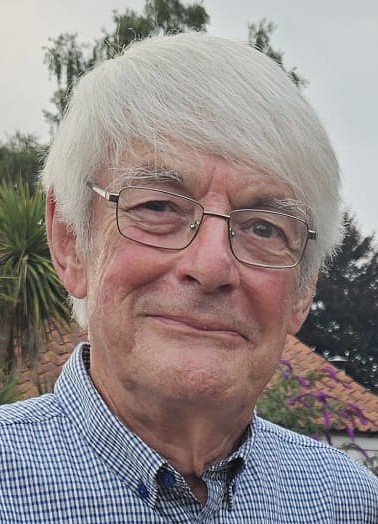
For the second half of the February 5th 2026 meeting we had an additional talk.
Update on flu
Graham Jackson
Graham is also known to most of you but here is a brief bio. He qualified as a vet in 1967 then worked in research and in a mixed veterinary practice in Cumbria for 2 years. He went on to work in the government laboratory investigative service – a bit like Silent Witness! The main emphasis was on farm animals and some wildlife in a range of different locations ranging from individual sites (farms etc), regional, national and international disease control.
www.gov.uk National flu and COVID-19 surveillance report 29 January 2026 (week 5) Updated 5 Feb 2026

Thursday January 8th 2026
Bob Beard
Plastics – `The story of Amcor Plastics Beccles (formerly M&H Plastics), processes, materials, current challenges and the future
Engineering Tutor
- Amcor - Who are they.
- Amcor Beccles - The story of Amcor Beccles from M & H to today
- Our Processes - How we mould plastics. Injection Moulding, Extrusion Blow Moulding, Injection Blow Moulding, Extrusion.
- Materials - What materials we use and why including PCR (Post-Consumer Recycling)
- Current challenges - Aging workforce, competitive job market, anti-plastic sentiment
- Our future - Training Academy, Sustainability, Diversity, Automation
Bob brought samples of materials and products.

Thursday December 4th
Christmas Social
Richard and Marion co-ordinated our Christmas Social.
There was a Christmas Quiz organised by John Humphery and a guess the object event. Everyone was asked to bring an object for others to identify. There were 3 categories.
- You know what the object is
- You think you know what the object is
- You don’t know what the object is but hope someone else will know!
Everyone was asked to bring a plate of something savoury or sweet to share. Soft drinks and mulled wine were provided. This event was free for SiTN members.
Thank you to all who made this a very successful event.
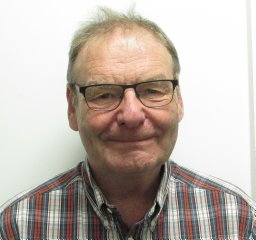
Robin Law on November 6th, 2025
'What can dead dolphins tell us?'
Robin is a retired environmental chemist who worked for the Centre for Environment, Fisheries and Aquaculture Science (Cefas) for 40 years in it's laboratories at Burnham-on-Crouch and Lowestoft. He has nearly 200 Scientific publications to his name and is a Fellow of the Royal Society of Chemistry. His career began studying the impacts of North Sea oil and gas operations, which led to an involvement in marine oil and chemical spills around England and Wales. His role was to provide advice on environmental mitigation and to undertake monitoring studies when needed. Other areas of interest have included analytical data quality, general environmental monitoring and the presence and impacts of chemicals in the marine environment, particularly in marine mammals.
He is now an active member of the U3a Science in the News steering group.
Click to Return to Science in the News Main Group Page
Astrophotography
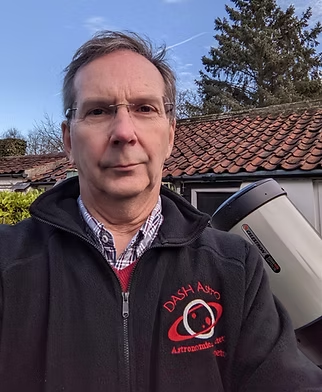
Chris Mead on October 2nd, 2025
Astrophotography is the art of photographing the night sky to capture shots of star clusters, nebulae, galaxies and other deep-space objects. Chris will take us through the techniques and equipment needed to achieve these shots.
After completing a Maths degree from University of Warwick, Chris worked in the chemical manufacturing industry for 7 years and the electronic instrument manufacturing industry for a further 14 years. Chris was then Head of Knowledge Management at a Government Agency and, lastly, worked for BSI as a Lead Information Security Auditor. Learning astrophotography was his retirement/lockdown project and he is now Chair and Secretary of DashAstro, an astronomical society based in Darsham."
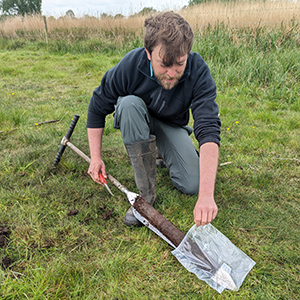
Dr. Daniel Wade on Thursday September 4th, 2025
Waveney and Little Ouse Recovery Project (WaLOR)
Daniel told us about his work for the Suffolk Wildlife Trust as Project Manager of the Waveney and Little Ouse Recovery (WaLOR) Project, which focuses on landscape recovery along the river valleys .
Daniel’s interests are centred around field ecology and habitat restoration and his PhD research was on avian influenza in wild birds.
Direct Carbon Capture

Jack Raven
Thursday July 10th, 2025
Jack gave us a talk on the latest developments in direct carbon capture technology
Jack is a Senior Sustainability Project Manager at the Sizewell C Development Program
--------------------------------------------
Forever Chemicals
Robin Law
Thursday June 5th, 2025
Robin told us about forever chemicals: what they are, why they are a problem, and what is being done about them - with no chemical structures shown, so we weren't intimidated!
Robin is a member of the U3A Science in the News group and is also a retired Cefas scientist
--------------------------------------------
Suffolk Energy from Waste, SUEZ recycling and recovery UK
On Thursday May 1st Jenny Steytler described how this facility near Great Blakenham uses waste that is left after recycling, as a fuel to generate electricity. The Suffolk energy-from-waste facility exports around 20 megawatts of electricity to the National Grid - enough to power 50,000 homes.
--------------------------------------------
Forensic Science Insights
April 3, 2025 St. Michael's Undercroft
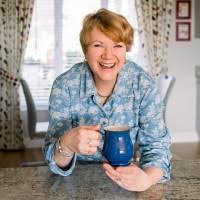
Mary Newton, a retired forensic scientist, returned to share more intriguing stories from her career, particularly focusing on how forensic analysis has solved complex cases. Her engaging presentation style made even the most challenging topics accessible and compelling.
--------------------------------------------
Artificial Intelligence: The good, the bad and the ugly
March 6th, 2025 St. Michael's Undercroft, Beccles
Our March talk by Jane Newbold covered how Artificial Intelligence (AI) is rapidly evolving from systems able to generate text and answer questions across a vast variety of subjects areas, to bioscience systems learning the intrinsic logic of masses of genomes. These bioscience systems are trained using whole genome nucleotide sequences (ChatGPT is trained using words). Drug companies are already using these systems to dramatically speed up key areas of research.
--------------------------------------------
GeoAcoustics Visit
March 19th, 2025 Field Trip to Great Yarmouth
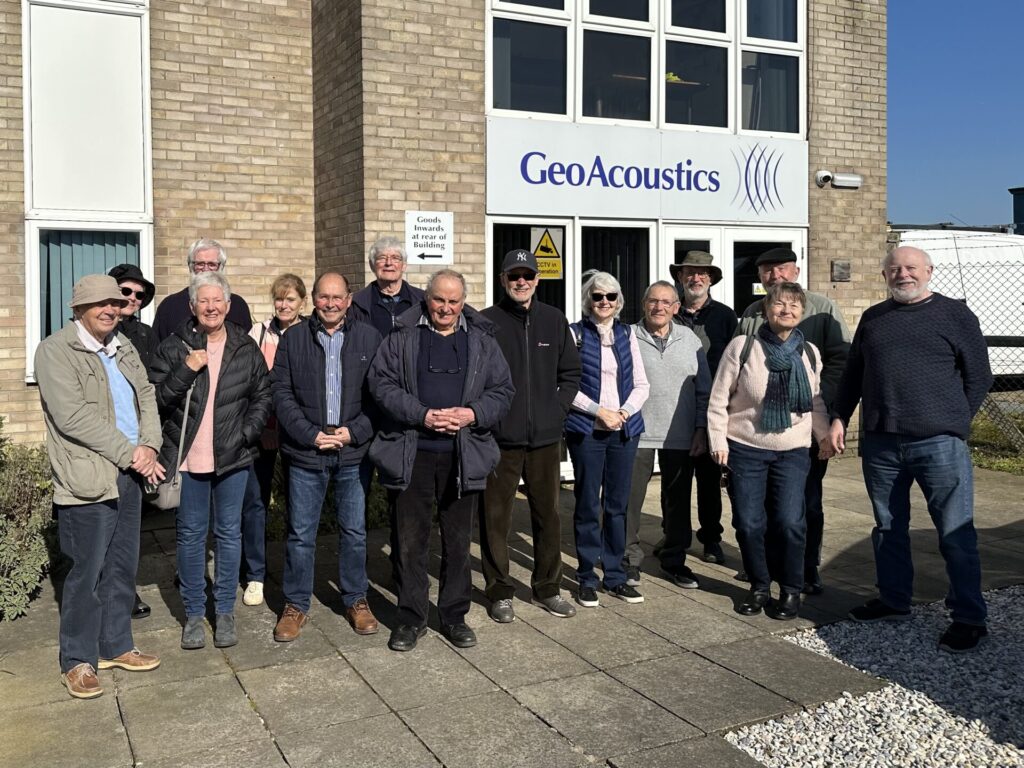
We enjoyed an outing to GeoAcoustics in Great Yarmouth. This company develops and produces equipment for a diverse range of marine surveys and underwater inspection applications. The group learnt about bathymetric sonars, side-scan sonar and sub-bottom profilers and understood some of the challenges presented in carrying out underwater surveys. We were very grateful to the staff at GeoAcoustics for their time and hospitality.
--------------------------------------------
The Development and Future of Precision Medicine
February 6th, 2025 St. Michael's Undercroft, Beccles
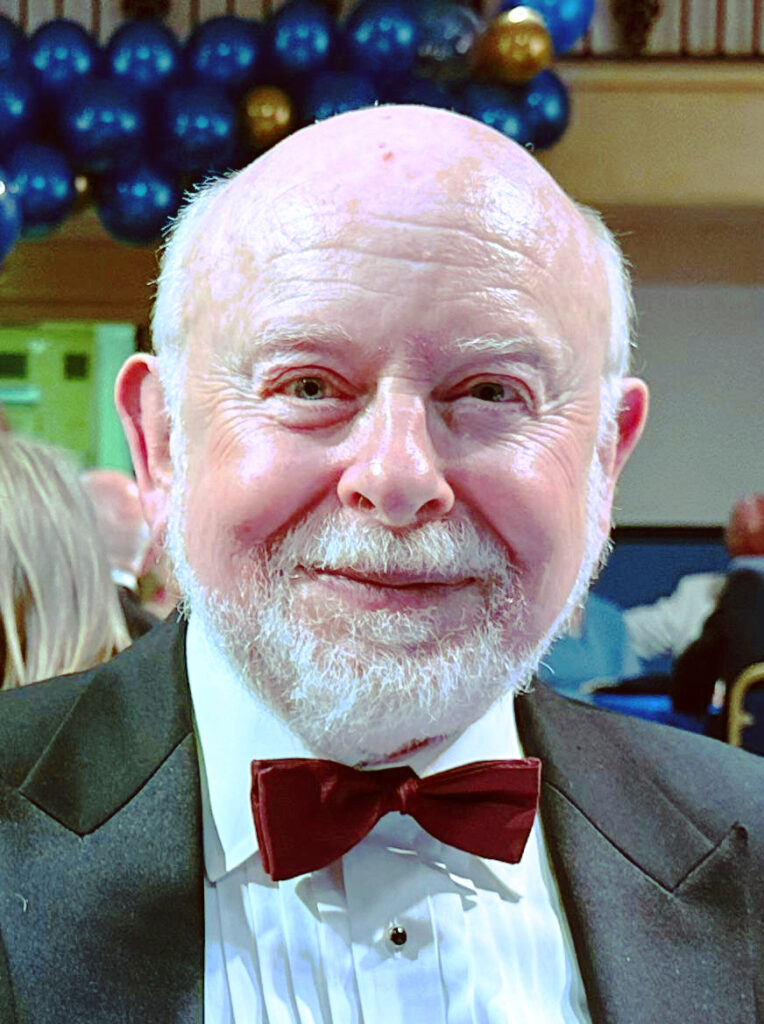
Peter Gascoyne.
Peter Gascoyne, a retired Professor of Biomedical Engineering in Pathology, gave a fascinating talk on how diagnostic medicine is evolving to take advantage of new technologies, thereby providing more effective treatments tailored to the individual needs of patients and realizing overall cost savings.
